Introduction
Artificial intelligence has rapidly transformed from a niche academic discipline into a cornerstone of modern technology. Among the many AI systems shaping this transformation, Claude AI stands out as a prominent and increasingly influential model developed by Anthropic. Positioned as a competitor to systems like ChatGPT by OpenAI, Claude represents a new generation of AI assistants designed with a strong emphasis on safety, interpretability, and alignment with human values.
This article explores Claude AI in depth, including its architecture, philosophy, applications, and the emerging ecosystem around tools such as Claude Code. We will also examine how Claude fits into the broader AI landscape, its strengths and limitations, and what its development means for the future of programming and human-computer interaction.
1. What Is Claude AI?
Claude AI is a family of large language models (LLMs) developed by Anthropic. Named after Claude Shannon, the father of information theory, Claude is designed to process and generate human-like text, assist with reasoning tasks, and support complex workflows across domains such as coding, writing, analysis, and research.
Unlike earlier AI systems that primarily focused on raw performance, Claude emphasizes AI safety and alignment. Anthropic’s guiding principle is to ensure that AI behaves in ways that are predictable, controllable, and beneficial to humans.
Key Characteristics
Claude AI systems typically exhibit:
- Advanced natural language understanding
- Strong contextual memory capabilities
- High-quality reasoning and structured output
- Emphasis on harmlessness and ethical constraints
- Reduced hallucination rates compared to earlier models
Claude models have evolved through multiple generations, including Claude 1, Claude 2, Claude 3, and beyond, each improving in reasoning, multimodal capabilities, and coding proficiency.
2. The Philosophy Behind Claude: Constitutional AI
One of the defining innovations behind Claude is the concept of Constitutional AI.
What Is Constitutional AI?
Constitutional AI is a training approach where the model is guided by a set of principles or “constitution” rather than relying solely on human feedback. These principles define acceptable behavior, ethical guidelines, and safety constraints.
Instead of directly labeling outputs as good or bad, the model learns to critique and revise its own responses according to these rules.
Why It Matters
This approach has several advantages:
- Reduces reliance on large-scale human labeling
- Improves consistency in ethical behavior
- Allows transparent reasoning about AI decisions
- Enhances scalability of alignment techniques
In essence, Claude is designed not just to be intelligent, but to be self-reflective and accountable in its responses.
3. Architecture and Capabilities
Like most modern LLMs, Claude is based on the transformer architecture, which enables it to process sequences of text efficiently and capture long-range dependencies.
Core Capabilities
Claude AI excels in several domains:
a. Natural Language Processing
Claude can understand complex instructions, summarize documents, translate languages, and generate coherent narratives.
b. Reasoning and Analysis
It can solve logical problems, analyze arguments, and assist with academic or technical inquiries.
c. Coding and Software Development
Claude is particularly strong in programming tasks, which leads us to the concept of Claude Code.
d. Multimodal Abilities
Recent versions of Claude can process not just text but also images and structured data.
4. Claude Code: AI-Assisted Programming
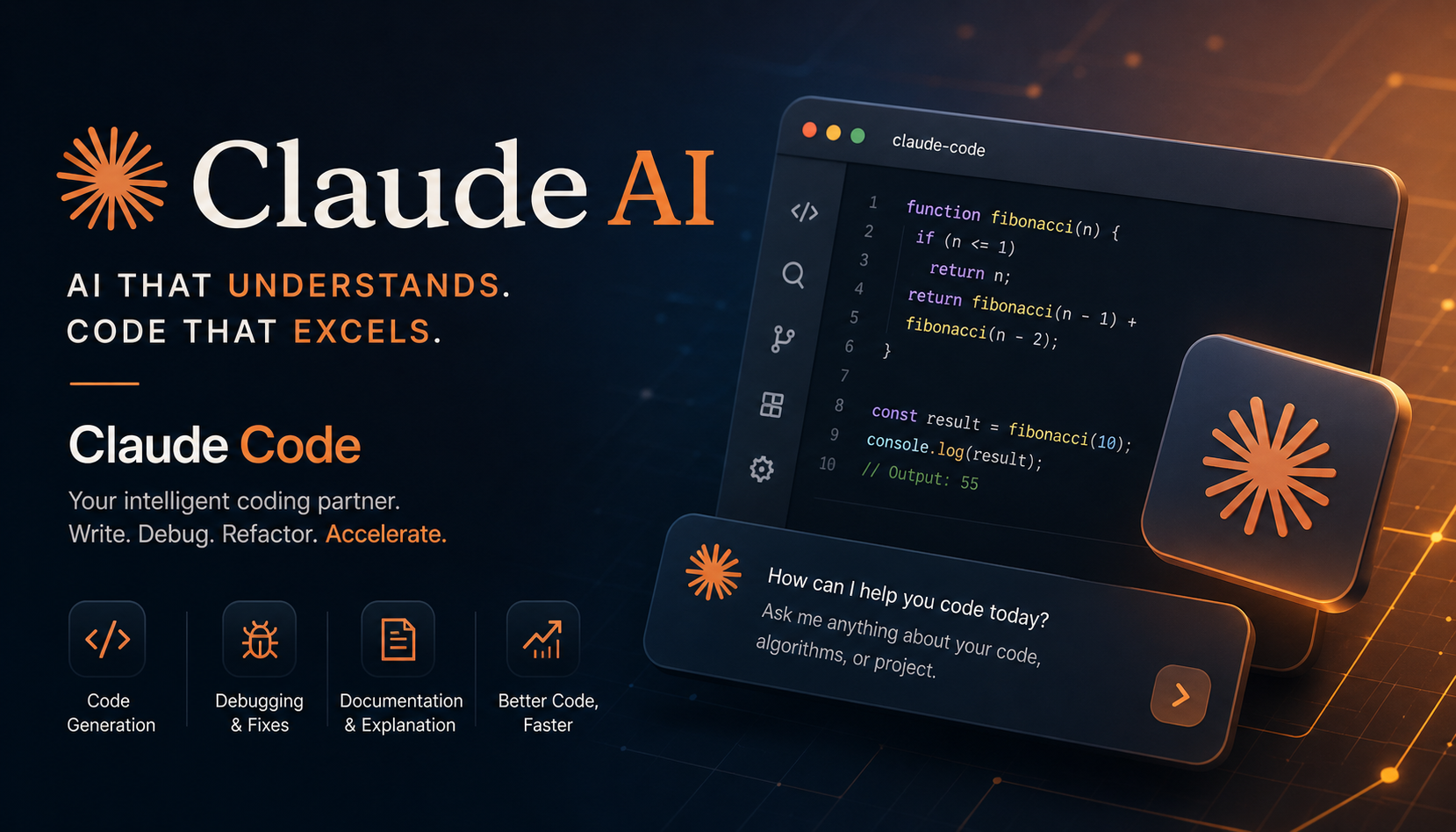
Claude Code refers to the application of Claude AI models in software development workflows. It is not a single product but rather a concept encompassing coding assistance powered by Claude.
What Can Claude Code Do?
Claude Code can:
- Generate code in multiple programming languages
- Debug existing code
- Explain complex algorithms
- Refactor and optimize code
- Write documentation
- Assist in test generation
Example Use Cases
1. Code Generation
Developers can describe a function in plain English, and Claude generates the corresponding code.
2. Debugging
Claude can analyze error messages and suggest fixes.
3. Learning Tool
Beginners can use Claude to understand programming concepts interactively.
4. Code Review
Claude can review code for readability, efficiency, and potential bugs.
5. Claude vs Other AI Models
Claude is often compared to systems like ChatGPT and Google’s AI models.
Key Differences
Safety Focus
Claude places a stronger emphasis on safe outputs and alignment.
Tone and Style
Claude tends to produce more cautious and nuanced responses.
Context Handling
Claude models are known for handling long contexts effectively, allowing them to process large documents.
Coding Strength
Claude Code is competitive with other AI coding assistants, sometimes excelling in explanation clarity.
6. Applications of Claude AI
Claude AI is used across various industries:
a. Software Development
Through Claude Code, developers can accelerate workflows and reduce repetitive tasks.
b. Education
Students use Claude for tutoring, essay writing, and concept explanations.
c. Business and Productivity
Claude assists with report writing, data analysis, and communication.
d. Research
Researchers use Claude to summarize papers and generate insights.
e. Creative Writing
Claude can generate stories, scripts, and creative content.
7. Strengths of Claude AI
Claude has several notable advantages:
1. Long Context Windows
Claude can process large amounts of text in a single prompt, making it ideal for analyzing documents.
2. Safety and Alignment
Its responses are generally more cautious and aligned with ethical guidelines.
3. Clarity of Explanation
Claude excels at explaining complex topics in an understandable way.
4. Coding Assistance
Claude Code provides strong support for developers at all levels.
8. Limitations and Challenges
Despite its strengths, Claude is not perfect.
1. Hallucinations
Like all LLMs, Claude can generate incorrect information.
2. Over-Cautious Responses
Its safety mechanisms can sometimes make it overly conservative.
3. Dependence on Prompts
The quality of output depends heavily on how questions are phrased.
4. Lack of True Understanding
Claude does not “understand” in a human sense; it predicts patterns based on data.
9. The Role of Claude Code in the Future of Programming
AI-assisted coding is transforming software development.
Key Trends
a. Augmented Developers
AI tools like Claude Code enhance human productivity rather than replacing developers.
b. Faster Prototyping
Developers can build applications more quickly using AI-generated code.
c. Democratization of Programming
Non-programmers can create software using natural language.
d. Continuous Learning
Developers can learn new languages and frameworks with AI assistance.
10. Ethical Considerations
Claude AI raises important ethical questions:
Bias and Fairness
AI systems can reflect biases in training data.
Job Displacement
Automation may impact certain roles.
Accountability
Who is responsible for AI-generated decisions?
Safety
Ensuring AI does not produce harmful outputs is critical.
Anthropic addresses these concerns through Constitutional AI and ongoing research.
11. Claude in the AI Ecosystem
Claude is part of a broader ecosystem of AI tools.
Integration with Tools
Claude can be integrated into:
- IDEs (Integrated Development Environments)
- Chat interfaces
- APIs for developers
- Enterprise platforms
Competition and Collaboration
Claude competes with systems from:
- Microsoft
- Meta
At the same time, the AI field benefits from shared research and innovation.
12. Future Developments
The future of Claude AI and Claude Code is promising.
Expected Improvements
- Better reasoning capabilities
- Reduced hallucinations
- Enhanced multimodal abilities
- More personalized interactions
- Deeper integration into workflows
Long-Term Vision
Anthropic aims to create AI systems that are:
- Helpful
- Honest
- Harmless
This vision positions Claude as not just a tool, but a trusted collaborator.
Conclusion
Claude AI represents a significant step forward in the development of intelligent systems. With its focus on safety, alignment, and usability, it offers a compelling alternative to other AI models. Through applications like Claude Code, it is reshaping how developers write software, how students learn, and how businesses operate.
While challenges remain, the trajectory of Claude suggests a future where AI is not only powerful but also responsible and aligned with human values. As the technology continues to evolve, Claude AI is likely to play a central role in defining the next era of artificial intelligence.